


Photographers in Residence
To 31 May
Carte blanche to experiment
At the heart of the Rencontres de la jeune photographie internationale is a unique Artist Residency. Six emerging French and international photographers are invited to Niort for a creative residency. Accompanied by Grégoire Eloy, they have carte blanche to experiment and compare their practices over a two-week period.
This year, 2 additional photographers are joining the Artist Residency thanks to associated programs:
– Planches Contact Festival in DeauvilleNaïma Lecomte, winner of the Normandy festival’s Prix de la Jeune Création Photographique.
– Institut français du Cambodge and Villa Marguerite Duras: following a call for applications, Cambodian photographer Raksmey Kong will join the Artist Residency.
The exhibition of photographers in residence is presented for the first time at our neighbors’ Bernard d’Agesci Museum!
And also for the first time, the exhibition extracted from the application files will be displayed alongside works created in Niort.
Practical info




Photographers in residence
They’ll be in Niort from April 3 to 20. Would you like to join them in their projects? Come and meet them on Saturday April 4 at 6pm in the auditorium of the Pierre-Moinot multimedia library.
Emanuela Cherchi (Italy/France)
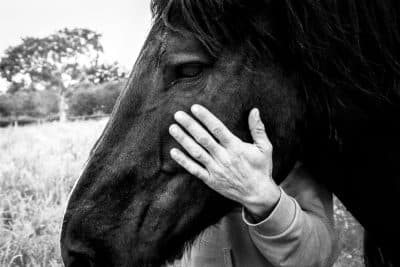
For this Artist Residency in the Niort area, I’d like to deepen my current research into the relationship between humans and other animals, exploring in particular the notion of disinterested care, that which is practiced without any expectation of reciprocity or profit. In a context where the animal is often perceived through the prism of its function as food, science or companion, how can humans truly go beyond this utilitarian logic to offer pure care, guided solely by altruism and respect for the animal as a living being?
To explore this subject further, I’d like to focus my work on a local wildlife care center, which I see as a place for observing and reflecting on care practices for non-human animals. The purpose of this type of structure is to take in injured or distressed animals, provide them with care and rehabilitate them with a view to their return to their natural environment.
At the moment, I’m interested in stories that embody a form of catharsis, however discreet. During this residency, I’d like to observe whether initiatives of this type, or other similar contexts present in the area, fit into this approach, and reflect on how to transcribe them into images.
Emanuela Cherchi website
Cloé Harent (France)
For the Artist Residency at La Villa Pérochon, I’d like to create a project inspired by the disappearance of a shepherd who marked my childhood, rekindling in me the desire to rediscover the world of the sheep and honor this ancestral bond.
I’d like to develop a sensitive body of photographic work around “The study of the sheep”, the flock’s life cycle and the materiality of the pastoral world – wool, dust, gestures, landscapes. This period of research in residence would also enable me to open a door onto the questioning of the materiality of my images, and to explore new, more plastic forms. Finally, this immersion would be an opportunity to meet two farms around Niort, in order to enrich this corpus.
Cloé Harent website
Raksmey Kong (Cambodia)
The project I wish to develop in Niort revolves around vulnerability, renewal, the body in relation to nature, water, textures, light and the long time of transformation. Inspired by river ecosystems and fragile environments, he will combine documentary-poetic photography and video to capture moments of gentleness, exposure and rebirth. Rather than representing healing as a rapid or completed process, the work emphasizes slowness, fragility and a form of silent strength, creating a visual space where vulnerability becomes the starting point for renewal.
Raksmey Kong’s Instagram account
Antoine Lecharny (France)
Situated fifty kilometers from Niort, Sainte-Soline has become a symbol of citizen environmentalist opposition movements and societal water issues. In this rural commune, a fifteen-hectare rectangular excavation had been dug to accommodate 628,000 m³ of water. Pumped in winter, the reservoir was intended to irrigate the surrounding fields in summer.
In the eyes of its opponents, this mega-pond project represented a privatization of a vital common resource for private production purposes. Among the many mobilizations, the one on March 25, 2023 was the most violently repressed by the gendarmerie, resulting in numerous injuries and continuing tensions between citizens and representatives of the state and agribusiness.
Today, now that we have more hindsight on the situation, that the courts have given their verdict, and that numerous texts by sociologists, agronomists, hydrologists and geographers have been published on the subject, I think it would be interesting to document through photography the traces of these resistance movements, their repression, as well as their current manifestations.
Antoine Lecharny website
Naïma Lecomte (France)
This fairly concentrated residency period will take me away from the habits I’ve developed in my projects, which are built over a long period of time, with repeated returns to the same locations. Here, the tighter confines of the residency will encourage me to adapt my practice and experiment with other ways of working.
During the residency at La Villa Pérochon, I’d like to work around Niort’s shared and allotment gardens, particularly those on the Quai de Belle-Île. During the creative period, I’d like to observe the presence and daily life in these places. The project will be based on an attentive approach to the gestures and habits that shape them day by day.
Naïma Lecomte website
Arthur Perrin (France)
New forms of spirituality are emerging in some of today’s environmental movements: rituals linked to living things, “new age” practices, energetic beliefs and reinvented narratives. Long a skeptic, I’ve begun to question my certainties about the emergence of these beliefs in ecological struggles. This project seeks to understand why, in a context of environmental emergency, some people turn to the invisible to find meaning or re-enchantment. I’d like to meet the people behind these practices and visually explore this shift towards a contemporary spirituality, while taking a nuanced approach to the phenomenon.
Arthur Perrin website
Marie Wengler (Denmark)
During my residency at La Villa Pérochon, I plan to develop a site-specific photographic project entitled Vous ne me verrez jamais le samedi (You shall never see me on Saturday). This project explores how the medieval myth of Mélusine continues to resonate through the landscape and architecture of Niort.
Through 7 to 10 photographs staged in dialogue with the city’s built environment, I will explore how the themes of secrecy, solitude and transformation – at the heart of the Mélusine legend – still resonate in the towers, churches, forests and rivers linked to its history. Rather than illustrating the myth directly, the series will evoke its atmosphere, using Mélusine as a lens to examine how myth becomes embedded in place and shapes the collective imagination.
Marie Wengler website
Jonas Wibaux (France)
This is my first Artist Residency, and I’ll be devoting two weeks exclusively to photography. I’m used to photographing on a daily basis, often in parallel with other activities, and I’m looking forward to creating a new working dynamic by stepping outside this framework. I’d like to take advantage of this time to immerse myself in Niort and the surrounding area, and move forward as I meet new people. I don’t have a specific project in mind, but I’m interested in several themes. I’m thinking of meeting local farmers and taking an interest in water in the region (Sèvre Niortaise, Marais Poitevin, agro-industrial agriculture), in line with the photographic work I’ve been doing up to now, between documenting agricultural work and environmental struggles, notably against megabassines in the Deux-Sèvres.
Jonas Wibaux’s Instagram account