


Julien MAGRE
Alive
To 27 September
Living
In 2023, photographer Julien Magre, winner of the Prix Niépce 2022, brings to a close his long-term work on his wife Caroline and their three children (Suzanne, Louise and Paul). A photographic project he began in 1999.
Since 2023, he has continued to explore the question of intimacy, but by expanding “his field of possibilities”. This time, he works in black and white, introducing landscapes and still lifes. These new images are presented here for the first time. Writing also plays a key role in his work. His texts, in the form of poems or notes, stand alone and do not necessarily echo the images.
Practical info


Guided tours
Whether you’re on your own, with friends or family, the guided tours offered by the Villa Pérochon’s mediation team are there to guide and enlighten you about the photographers’ approaches. Come and enjoy a convivial moment at the foot of the works!
These tours are free and open to all. Reservations recommended by e-mail or telephone.
Some tours are led by Xavier Ribot, associate professor of visual arts. He will show you the exhibition from a different angle.
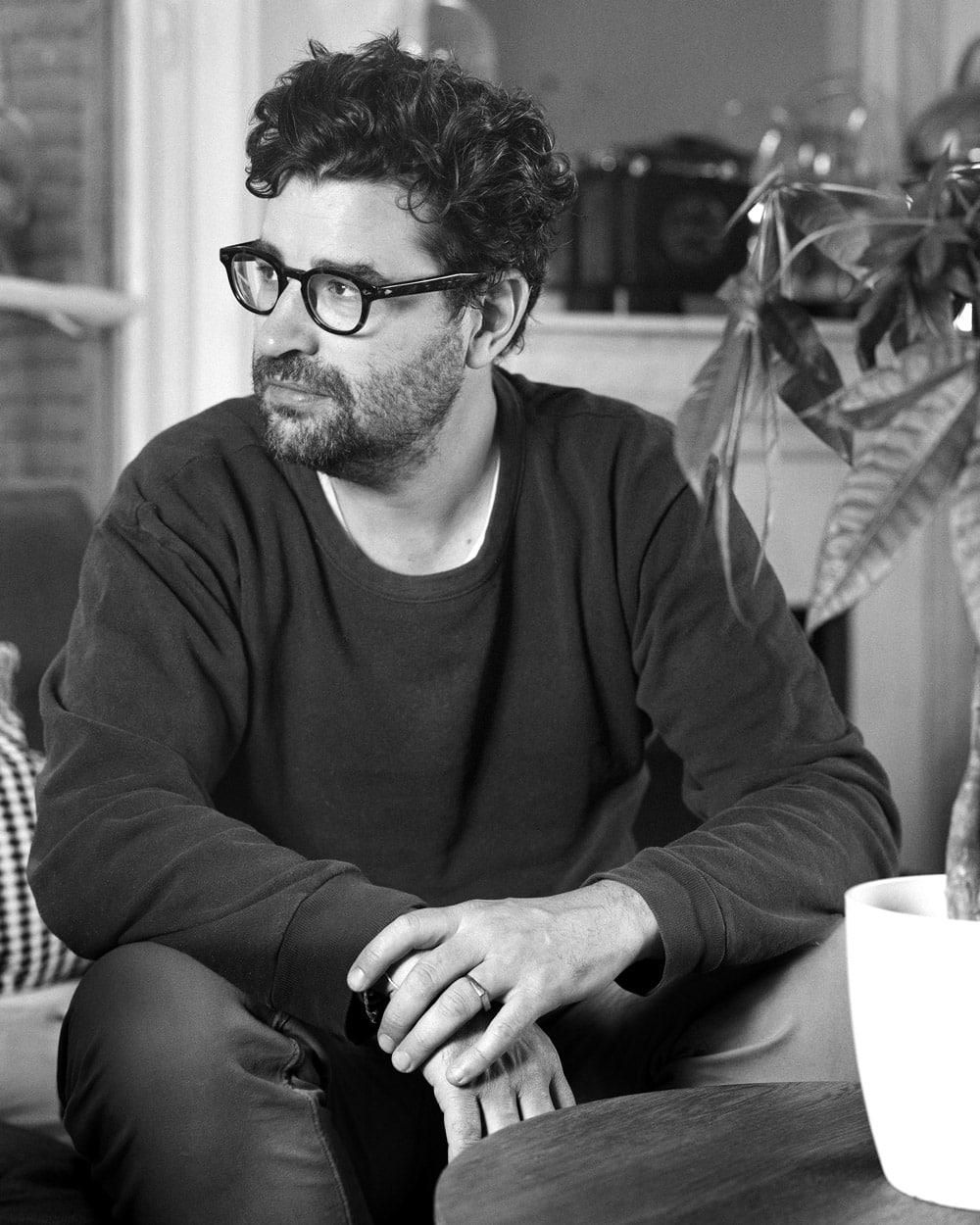
Biography
Julien Magre was born in 1973. At Paris Photo 2010, Agnès B. spotted his work when she signed Caroline, Histoire numéro deux (Filigranes). Talking about this project, which he has now been carrying out for over twenty years, the photographer describes himself as a “spectator of his own intimacy”: choosing the right distance from his subject, neither too far nor too close, he documents his everyday life, and thereby makes it poetic.
In 2014, he was part of the BAL group show, S’il y a lieu, je pars avec vous with S. Calle, A. d’Agata, A. Bublex and S. Couturier. He published the book Je n’ai plus peur du noir in 2016 (Filigranes). From then on, black and white appeared in his photographic practice. In March 2017, he joins Le Réverbère gallery in Lyon. There, he presents Elles, a body of 350 images taken between 1999 and 2017, based on his work on his family.
In 2022, he won the Prix Niépce and was part of the major photographic commission “Radioscopie de la France”.